







For the coach
Modern football coaching is no longer limited to shouting from the sidelines; it is the art of maximizing player potential using technological tools. Virtual Reality (VR) has become one of the most powerful analytical and teaching tools at a coach's disposal. VR offers coaches a level of control and data richness that is impossible in traditional training sessions.
Quantitative Data with Cognitive Performance Analysis
VR enables coaches to measure how quickly and accurately a player thinks. This is a scientific approach that goes beyond observation.
It measures the time in milliseconds between the player noticing a pass option and making a decision. It observes how this time changes under high pressure.
It numerically indicates how close the player's selected pass/shot option is to the most suitable option determined by the system.
Information Gathering: Collect all information in the surrounding area through visual scanning.
Analiz Etme: Quickly process and evaluate the collected information.
Planning: Strategically determine the next move.
As the game progresses or towards the end of training, it monitors whether there is a decline in the player's decision-making speed and accuracy. This data helps the coach make scientific decisions about player substitutions.
You can keep players mentally at their peak without physically exhausting them or creating a risk of injury. Tactical training can even be squeezed into physical rest days.
Scenarios that only involve the goalkeeper or only the defenders can be worked on separately without needing to bring the entire team onto the field. This allows for more efficient use of training resources.
For the Player
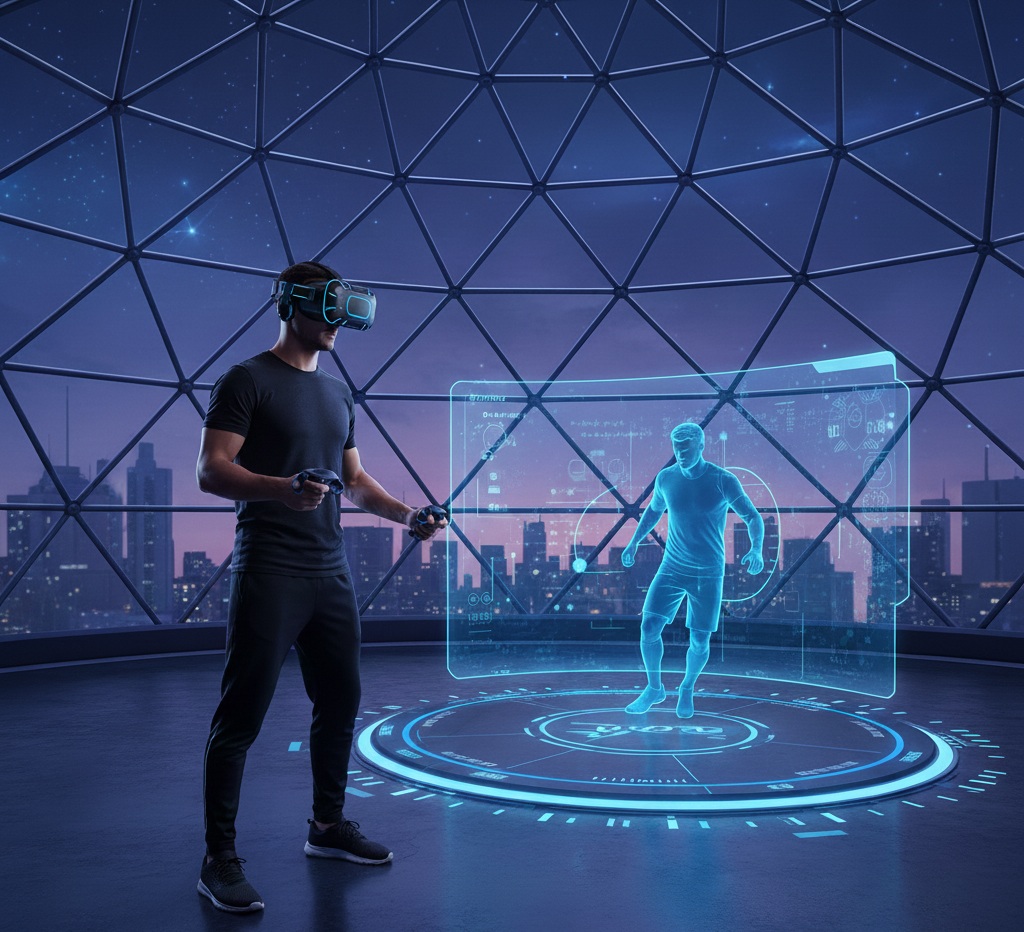
Simply running for hours and shooting the ball isn't enough to develop your soccer skills. Now, the best players also train mentally. Virtual Reality (VR) glasses aren't just a fun game for you; they are your own personal training gym. VR allows you to get ahead of your opponents by making the most efficient use of your time off the field.
VR offers realistic match moments that constantly ask you, “Should I pass, dribble, or shoot?” Thanks to these repetitions, when the ball comes to your feet in a real match, You automatically make the right decision instead of thinking.
No matter where the ball is on the field, you learn to read the movements of the 21 players around it. VR sharpens your ability to perceive the movements of defensive and offensive players, ensuring you're always in the right position on the field.
Is your left foot weak? In VR, you can work on targets and scenarios that require you to kick only with your left foot. Thanks to the system's instant feedback, you can quickly improve your kicking technique without needing anyone else's help.
VR records every second of your training. It provides a scientific report card showing how quickly you make decisions, your pass accuracy, and your weak points. With this data, you know exactly which areas to focus on.
For Parents
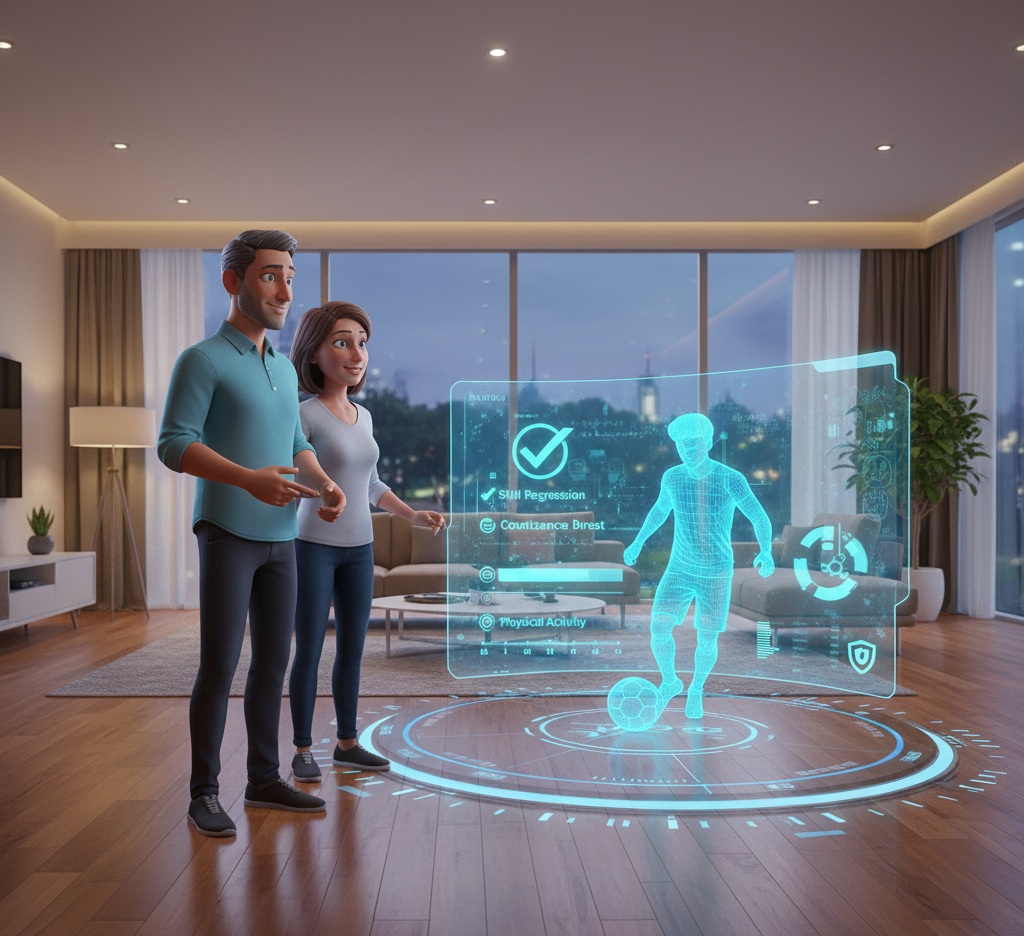
Supporting your child's passion for soccer and seeing their healthy development and success is always your priority. Virtual Reality (VR) technology provides transparency and confidence not only for players and coaches, but also for you regarding your child's training process. VR opens a scientific window for you to observe cognitive and mental development that traditional training hides.
VR training provides repetition-based, mentally demanding exercises without physical exhaustion or risk of injury. While physical training takes place on the field, mental training is safely conducted in VR.
Thanks to the R reports, you will clearly understand the goals set by the coach and your child's weaknesses (such as the tendency to see themselves only as a right-wing player). This allows you to say to your child, “According to the VR report, keep working on your passing angle” instead of just saying, “Play well.” more meaningful and goal-oriented helps you provide support.
Advanced VR systems analyze your child's movement mechanics, enabling the early detection of potential injury risks (poor posture, imbalance).